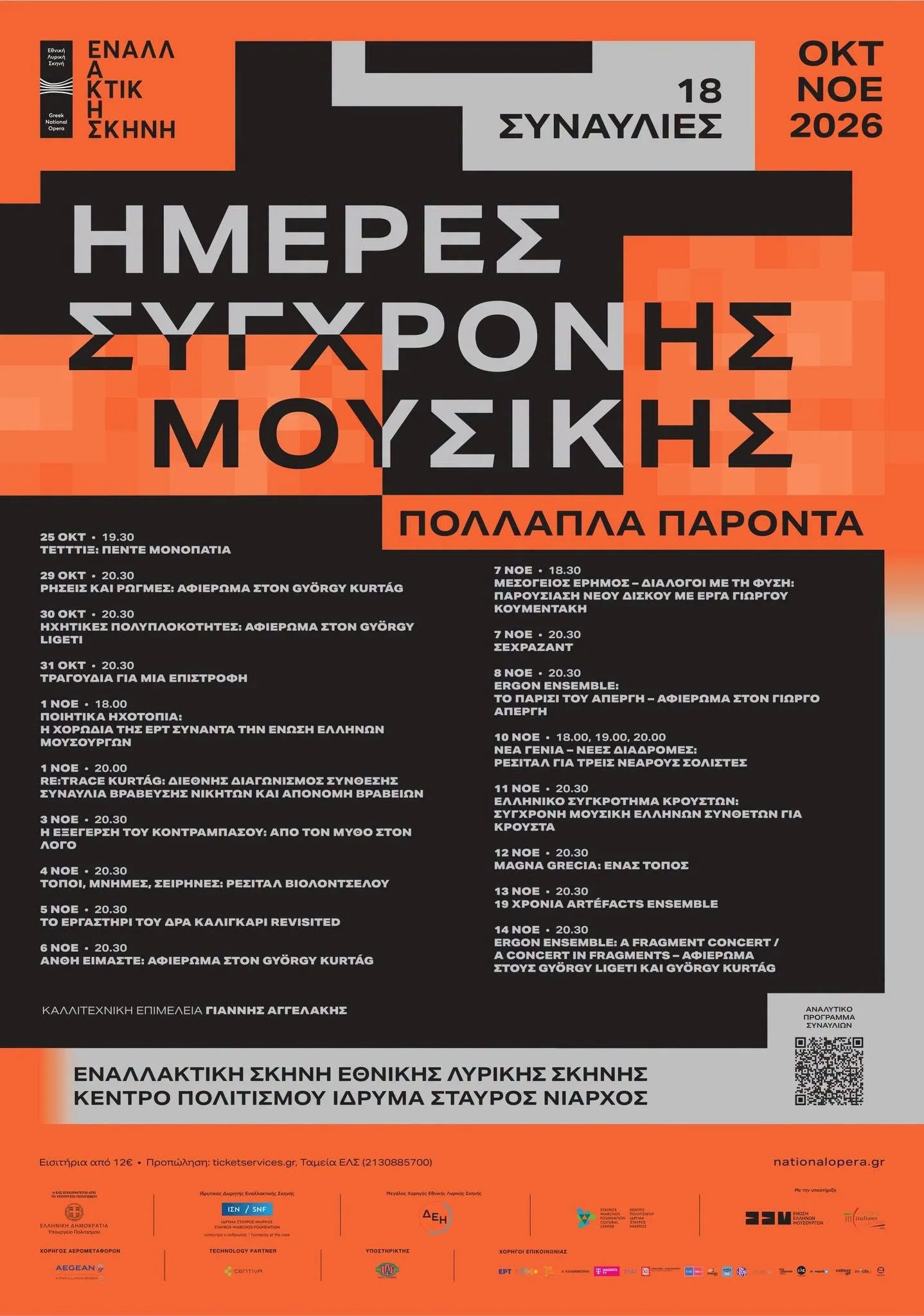
Greek National Opera – Alternative Stage
Contemporary Music Days – Multiple Presents Festival (October–November 2026)
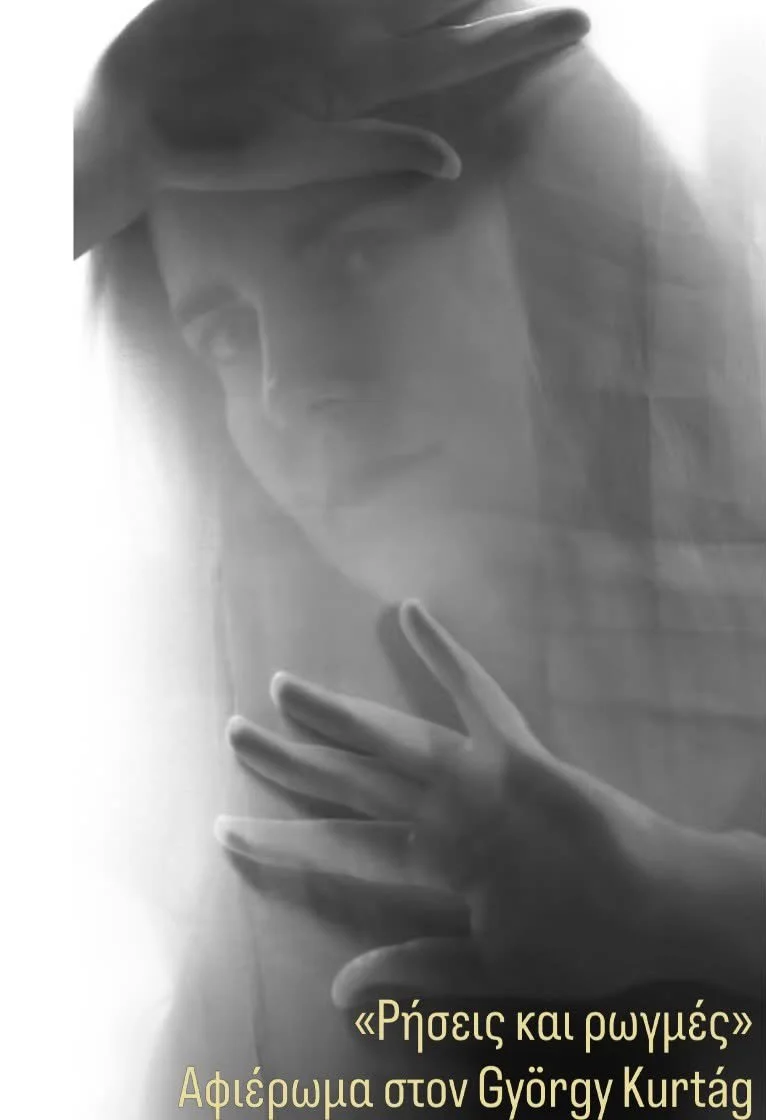
Sayings and Cracks – A Tribute to György Kurtág
Ρήσεις και ρωγμές – Αφιέρωμα στον György Kurtág
György Kurtág – The Sayings of Péter Bornemisza, op. 7, concerto for soprano and piano
Stylianos Dimou – Where Bornemisza Cracks / Στις Ρωγμές του Bornemisza, ten miniatures for voice, piano and electronics (GNO commission, world premiere)
Fani Antonelou soprano, Giorgos Konstantinou piano
The centrepiece of the programme is György Kurtág’s The Sayings of Péter Bornemisza, op. 7, sung in English. A landmark of post-war Hungarian music, it is often counted among the most important works written after Bartók. In forty-five minutes of extremely concentrated writing, Kurtág creates a singular concerto for voice and piano. Its twenty-four short movements are grouped into four cycles: Confession, Sin, Death and Spring. Through them, the sayings of the persecuted sixteenth-century Hungarian preacher become an almost explosive physical and psychological event: a man wrestling with his demons, with rot and with death, until he lifts his eyes towards spring. His words are old; his unrest is ours.
Stylianos Dimou’s new work Where Bornemisza Cracks (Στις Ρωγμές του Bornemisza), commissioned by the GNO, enters into direct dialogue with Kurtág’s cycle. Ten miniatures, moving between acoustic and mixed electroacoustic writing, slip into the gaps and breaths between its movements, where its material seems to fracture, from an opening to a closing. Five recorded recitations by the soprano introduce the concert and each of the four cycles, distilling its world into poetry. The composer synthesized the texts of both the miniatures and the recitations from the sayings that Kurtág sets, as a reflection on them. Within the Cracks, Bornemisza’s Hungarian returns as sound, as syllables and breath, while spare English lines open like fissures of meaning.
Voice, piano and electronics fuse into a single sonic body. The electronics are its memory: through machine learning, recollections of Kurtág are drawn back to the surface, altered, as if remembered by someone else. The voice becomes body and behaviour, broken into fragments. The piano gives flesh to the harmonies that rise from the electronics.
Kurtág thus becomes a place to inhabit. Each Crack shifts the way we listen, and the next song is heard differently. The evening becomes a meta-experience, a “Post-Kurtág”.
Concert structure
Recitation – Bornemisza Péter mondásai…
Man wrestles with his demons. He writes in shame, sees the rot within him, trembles before death. He sees no way out. His words are old; his unrest is ours. Listen.
Crack I – Opening (Dimou)
Recitation
You did not want to write. The harder you pushed the temptations away, the more they grew. Now your words are here — a mirror before you. Look.
Confession (Kurtág)
Crack II (Dimou)
Recitation
Fog between you and the light. Your mind wanders; the rot within you lies quiet — until something stirs it, and it squirms like maggots in carrion. Let the word dig.
Sin 1–3 (Kurtág)
Crack III (Dimou)
Sin 4–8 (Kurtág)
Crack IV (Dimou)
Sin 9–10 (Kurtág)
Crack V (Dimou)
Recitation
You are a flower, a frail flower. Death spreads its net; you writhe, as the soul is torn from the body. Each of us pays the debt. And yet, beyond the iron gate, a garden is in bloom.
Death 1–3 (Kurtág)
Crack VI (Dimou)
Death 4–5 (Kurtág)
Crack VII (Dimou)
Death 6–7 (Kurtág)
Crack VIII (Dimou)
Death 8–9 (Kurtág)
Crack IX (Dimou)
Recitation
After the ashes, the light. Lift your eyes: the stars are smiling at you. Trees put forth leaves again, every creature stirs — and the poor man, frozen all winter long, finds warmth once more.
Spring (Kurtág)
Crack X – Closing (Dimou)